
The Limits of Human Explanation
Book of JobThis arc follows the competing human explanations of suffering and the poem's movement toward a vision of reality too vast for those explanations to contain.
increasing Bearing strength in each event
 decreasing
Bearing strength in each eventdecreasingA Familiar Rule
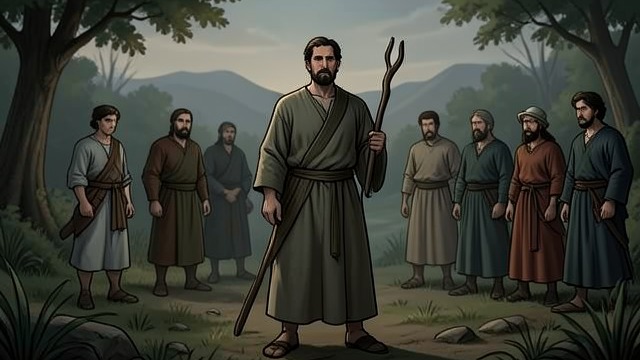
A Familiar Rule
Confidence
Eliphaz says that those who sow wrongdoing reap calamity and urges Job to accept correction.
The Rule Tested
His reasoning sounds coherent but assumes that suffering transparently reveals character. Job's life will expose the weakness of that inference.
The Friends Double Down
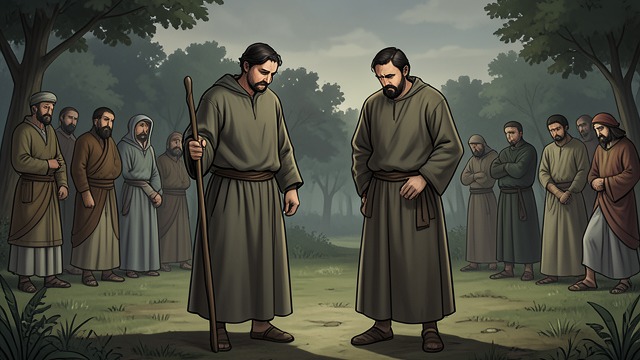
The Friends Double Down
Traditional Wisdom
Bildad and Zophar appeal to inherited teaching and insist that repentance would bring relief.
Narrowing Possibilities
Their advice leaves Job only two options: confess an offense or be called dishonest. As they repeat the rule, consolation becomes accusation.
Job's Counterexamples
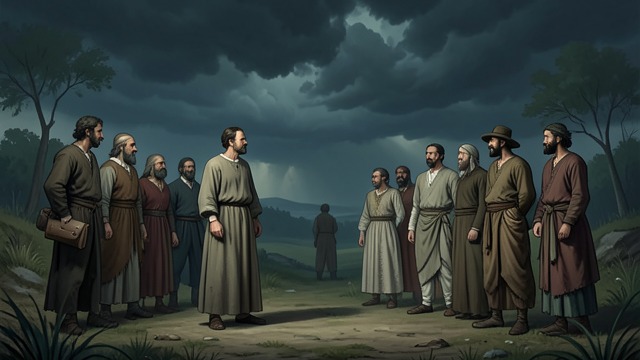
Job's Counterexamples
Observed Injustice
Job points to wicked people who live securely, prosper, and die without the punishment his friends predict.
Argument from Reality
His examples challenge the claim that earthly outcomes reliably disclose moral worth. He asks his friends to account for the world they can actually see.
Elihu's Reinterpretation
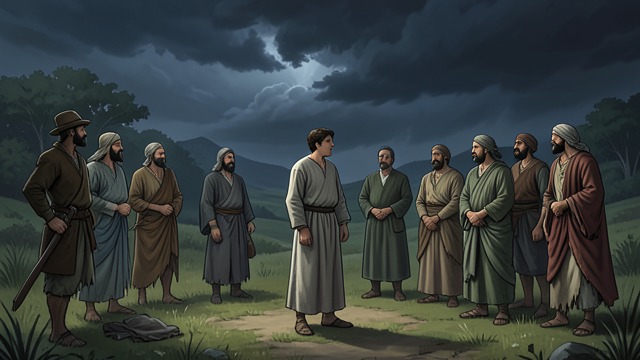
Elihu's Reinterpretation
A Younger Voice
Elihu rebukes Job for claiming too much and argues that suffering can discipline or instruct.
Partial Response
His account offers another purpose for pain but still speaks with confidence about divine intention. The intervention delays rather than ends the demand for an answer.
Creation Exceeds the Rule

Creation Exceeds the Rule
A Wider World
God evokes weather, stars, and untamed animals, including creatures beyond ordinary human control.
New Perspective
The speech does not furnish a formula for Job's suffering. It reveals a world not organized around human expectations, placing the friends' certainty in doubt.
In Eliphaz's first reply
During Bildad and Zophar's early speeches
Midway through the debate
After Job's oath of innocence
During God's speeches from the whirlwind
